


World Cup odds can be confusing, especially with the new 2026 format changing how matches are played. This guide is designed for South African beginners, explaining what the odds really mean and how to approach them without unnecessary risk!
2026 World Cup: How will the changes hit South African betting odds?
With the new 48-team format coming into play, the entire World Cup structure has changed and so has the betting market. From overall tournament odds to individual match pricing, the logic behind the lines now looks very different. Whether you’re watching Bafana Bafana’s chances of getting out of the group or trying to spot a potential group-stage upset, these changes are directly reflected in the odds.
Under the old 32-team format, only 16 teams advanced to the knockout stage. Now, with 12 groups, the top two teams from each group plus the eight best third-placed teams move on. What does this mean in practice? More room for error for so-called “non-traditional contenders,” and a complete re-evaluation of African teams’ qualification chances. In early market projections, teams like South Africa — once seen as outsiders — are no longer priced at long double-digit odds to progress. Instead, many international bookmakers have shifted them into mid-range qualification odds, reflecting a genuine increase in their chances and overall betting value.
That said, there’s also a downside South African players should be aware of. With a longer tournament and more matches to get through, outright winner markets on top teams have become more conservative. Traditional powerhouses like Brazil and Argentina are still heavily favoured, but bookmakers now have to price in the added uncertainty of an extended schedule. As a result, their title odds are often pushed lower. One common mistake among beginners is ignoring these structural changes and chasing big prices on long shots, only to be knocked out before the group stage is even finished.
Three key ways the new format affects betting odds
1. More qualification spots, lower odds for African teams
With more teams advancing, markets expect a stronger African presence in the knockout rounds. That’s why early lines have already adjusted qualification odds for teams like South Africa. For players, these bets tend to work better as small-stake or emotional plays, rather than heavy commitments.
2. Longer knockout path, favourites are “safe but not sweet”
Winning the World Cup now requires getting through more matches. While squads like England and France still have the depth to handle it, outright odds offer limited upside. For newer players, markets such as “to reach the quarter-finals” or “to reach the semi-finals” often provide a better balance between risk and return.
3. Third-place qualification markets become a value zone
With eight third-placed teams advancing, this market has become a major focus for bettors. Underrated sides can often be found at odds above 3.00, but only if you take the time to study group dynamics and match schedules, not just team names.
How to Read World Cup Betting Odds
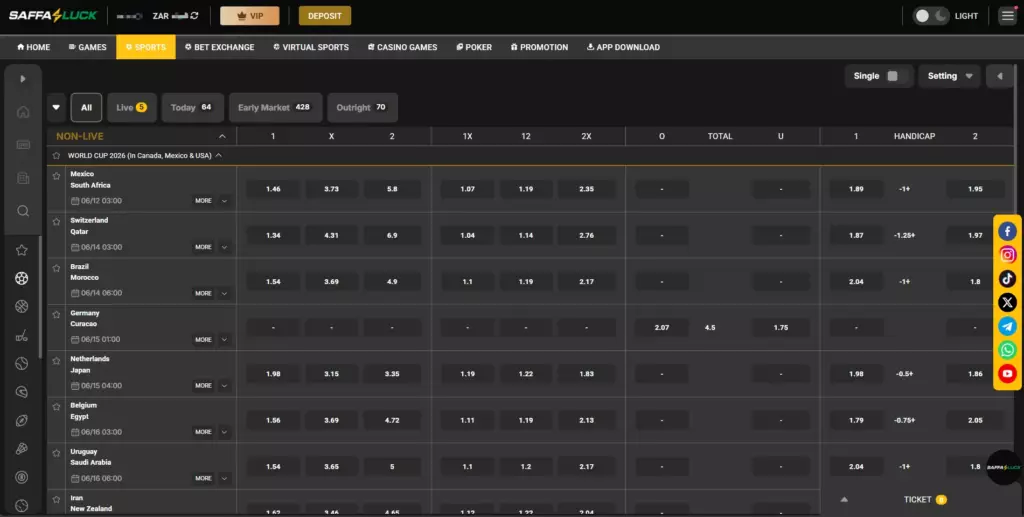
2026 World Cup Odds
With the 2026 World Cup just around the corner, many South African beginners are eager to get involved in betting on the tournament. The first problem most people run into, though, is simply not understanding the odds. This is very common, especially during an event as big as the World Cup, where all the numbers and betting options can quickly become confusing. That’s why this guide breaks down World Cup betting odds in the simplest way possible. helping you understand what the numbers really mean and how to read them with confidence.
Most World Cup betting markets in South Africa use decimal odds
In South Africa, most World Cup betting markets use decimal odds as the standard format. Fractional odds are mainly seen on UK-based platforms, while American odds are far less common. That said, most local and international betting sites allow players to switch between different odds formats in their account settings.
One reason decimal odds are so popular is that they show the total return upfront. You simply multiply your stake by the odds to see exactly how much you’ll get back if the bet wins, no extra calculations needed. For many South African beginners, this makes betting much easier to understand and helps avoid common mistakes when placing a wager.
What do the numbers in betting odds mean?
For many South African beginners, a World Cup betting page can look overwhelming at first, with rows of numbers everywhere. But once you focus on just two key points, those odds start to make a lot more sense.
(1) The odds number shows how much you can get back if your bet wins
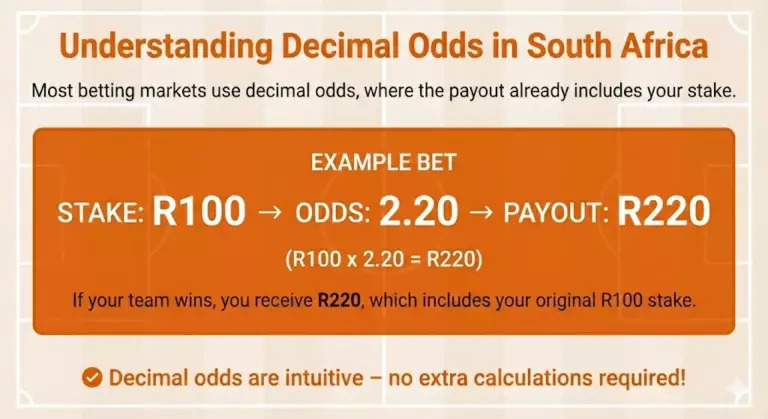
In South Africa, most betting markets use decimal odds, where the odds already include your stake.
For example, if a team is priced at 2.20 and you place a R100 bet, you’ll receive R220 if it wins, including your original R100. That’s why many South African players find decimal odds more intuitive, as there’s no need to do extra calculations.
(2) Higher or lower odds reflect the level of risk
When bookmakers price a match, lower odds on Team A usually mean they believe that team has a higher chance of winning, but with a smaller payout. On the other hand, higher odds on Team B suggest the outcome is less likely, which also means more risk.
One of the most common mistakes South African beginners make during the World Cup is focusing only on the high odds, without fully understanding the risk behind them.
Where Do World Cup Betting Odds Come From?
Many South African players assume betting odds are just numbers bookmakers make up on the spot. In reality, every set of World Cup odds is based on a detailed risk assessment and constant market adjustments.
How bookmakers set odds based on risk
For a global tournament like the World Cup, bookmakers take a lot of factors into account when pricing a match. This includes recent team form, head-to-head history, player injuries, fixture congestion, and even how betting money is being placed across the market. Most of this information comes from official FIFA data and long-term performance trends, not gut feeling or guesswork.
From a bookmaker’s perspective, the goal of odds-setting isn’t to predict the winner; it’s to manage risk. If too much money starts coming in on one outcome, the odds are often adjusted downward. On the other hand, options attracting less interest may see their odds increased to balance the action. That’s why South African players often notice odds changing as kickoff gets closer.
Why do World Cup betting odds keep changing?
World Cup betting odds don’t stay the same, especially in the days leading up to a match, when movements tend to be more noticeable. Common triggers include player injuries, confirmed starting line-ups, changes in weather conditions, and sudden spikes in betting activity on one side.
In the South African market, when a large number of players back the same team, bookmakers will usually adjust the odds to reduce their own exposure. That’s why more experienced players pay close attention to how odds move over time, rather than focusing only on the final numbers. In many cases, odds movement itself reflects how the market is assessing the risk of a match.
Why Understanding Odds Matters More for the 2026 World Cup
With the 2026 World Cup kicking off in June, South African players are starting to look beyond just which odds are higher. Understanding what those numbers actually represent, the risk behind them, and the impact of the new tournament format matters more than ever. If you’re still unsure about how World Cup odds work or how the new format might affect your betting choices, taking a bit of time to observe before placing a bet can make a real difference. Reading the odds properly and knowing the format helps you avoid being led by the market and lets you enjoy the world’s biggest football tournament with more confidence.