


Howzit bru! As the global football community prepares for the highly anticipated FIFA World Cup 2026, a massive wave of excitement is sweeping across South Africa. From local taverns to premium sports lounges, the conversations are heating up. We all want to know who is going to stand victorious on the global stage. This upcoming tournament is officially the largest edition in sporting history, featuring an expanded format of 48 nations playing across the United States, Canada, and Mexico from June 11 to July 19, 2026.
While traditional pundits are busy analyzing squad depth and injury lists, a new player has completely disrupted the sports betting landscape: artificial intelligence. Modern sports betting in South Africa is no longer just about gut feelings or backing your favorite jersey. Savvy punters are shifting their strategies toward data-driven insights. In this ultimate guide, we dive deep into the fascinating world of advanced soccer predictions powered by the world’s leading AI models to see who they tip to lift the ultimate gold.
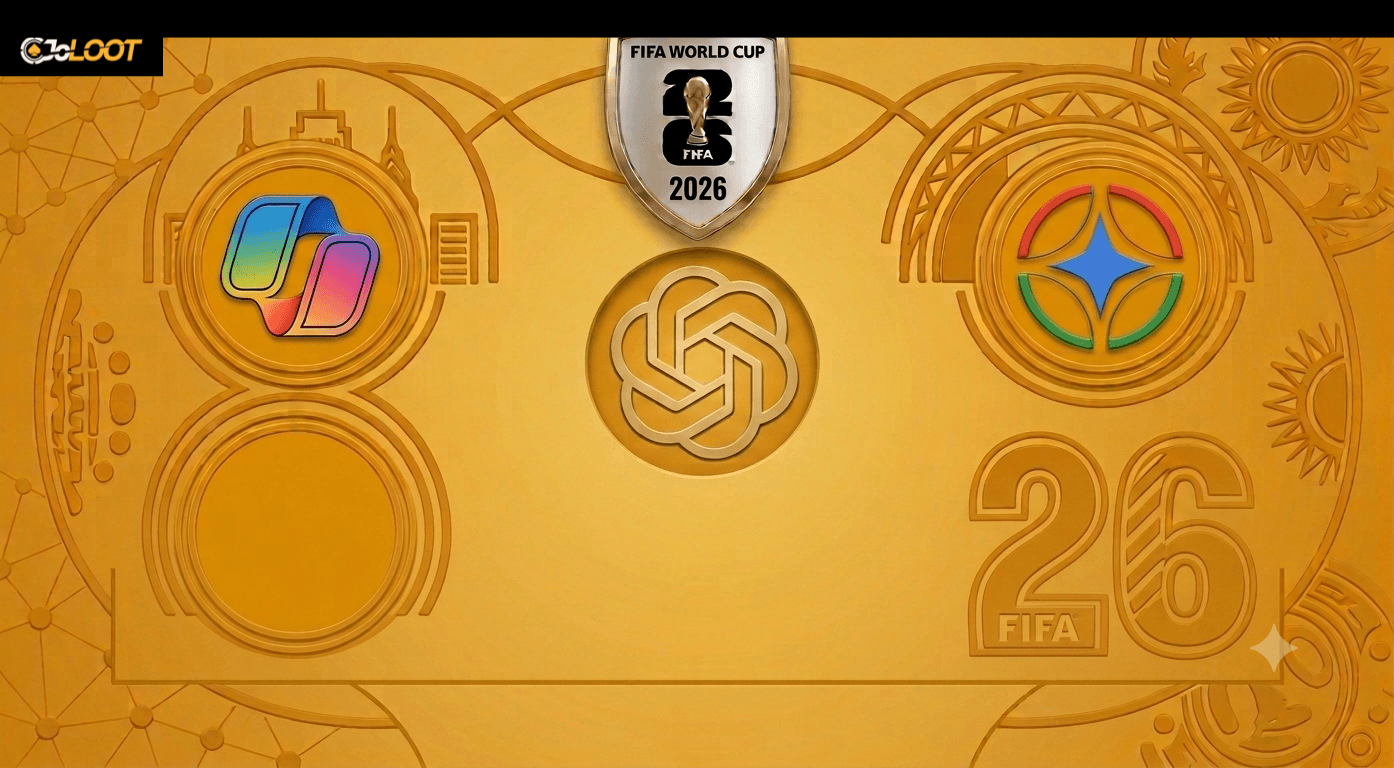
FIFA World Cup 2026 AI Predictions
Technology is officially taking over the pre-tournament debate. Three of the most powerful artificial intelligence models on earth, namely ChatGPT, Microsoft Copilot, and Google Gemini, have analyzed billions of historical football data points to project the most likely outcomes. Interestingly, these distinct neural networks show remarkable alignment regarding the elite European powerhouses, collectively pinpointing one massive favorite to rule the world.
When the data was compiled, France emerged as the absolute frontrunner. Both ChatGPT and Microsoft Copilot have explicitly backed Les Bleus to replicate their glorious 2018 triumph and secure another world title. The algorithms base this heavy favoritism on three definitive metrics: unparalleled squad depth across all positions, extensive experience playing under high-pressure tournament conditions, and the presence of Kylian Mbappe, who is widely considered to be at the absolute peak of his global career. The numbers suggest that Didier Deschamps has constructed an almost flawless tournament engine.
AI Prediction Comparison Table
| AI Model | Predicted Winner | Primary Betting Advantages | Key Star Player |
|---|---|---|---|
| ChatGPT | France | Elite squad depth, unmatched tournament consistency | Kylian Mbappe |
| Microsoft Copilot | France | High-pressure match experience, robust defensive transition | Kylian Mbappe |
| Google Gemini | Spain | Flawless ball possession, incredible tactical fluidity | Lamine Yamal |
Team Consistency in FIFA World Cup 2026
The predictive models lean heavily on structural consistency and recent international performance data. France’s track record is undeniable, having reached the final match in the last two consecutive editions of the global tournament. The AI systems view their roster as the perfect equilibrium of explosive, youthful energy and calm, battle-tested veteran leadership. When executing complex soccer predictions, consistency is weighted as a primary success metric, making France a highly reliable option for long-term futures betting.
However, Google Gemini diverged slightly from its technological counterparts by placing its primary bet on Spain. The Gemini algorithm indicates that La Roja possesses an extraordinary competitive edge driven by a golden generation of miraculous young talents, highlighted by the meteoric rise of Lamine Yamal. Following Spain’s phenomenal triumph at Euro 2024, their collective team confidence is at an all-time high. Gemini rewards Spain’s signature tactical blueprint: a system defined by absolute ball possession, flawless defensive organization, and incredible tactical fluidity that can systematically dismantle any opposition over a grueling tournament schedule.
Dark Horses and Expert Soccer Predictions
Alternative Contenders and Dark Horses Table
This table structuralizes data from the dark horses section regarding the teams outside of France and Spain.
| Contender Country | Status / Insight | Key Prediction Source |
|---|---|---|
| Argentina | Defending champions, highly monitored data metrics | Global AI Probability Radar |
| Brazil & England | Elite rosters with high attacking efficiency tracking | Global AI Probability Radar |
| Netherlands | Tipped to make history and break their runners-up curse | German Econometric Trend Model |
Beyond the immediate French and Spanish dominance, the AI frameworks acknowledge a select tier of elite contenders capable of altering the script. Perennial powerhouses like Argentina, Brazil, England, and the Netherlands remain high on the probability matrix. Every serious analyst looking at sports betting in South Africa knows that ignoring these footballing giants during the group stages can be a very risky move.
In a fascinating twist, human economic intelligence has offered an alternative perspective that challenges the AI consensus. A prominent German economist, renowned for accurately predicting the winners of the last three consecutive global tournaments using complex econometric models, has backed the Netherlands to win. If this mathematical prediction holds true, it would mark the first time in football history that the Oranje lift the trophy, breaking their historical curse of finishing as runners-up. This highlight shows that while AI relies relies heavily on immediate historical form, mathematical trend forecasting can reveal massive high-value opportunities for sports bettors.
Algorithmic Sports Betting in South Africa Case Study
To understand why these AI predictions carry immense value for sports betting in South Africa, we can look at a real-world statistical analysis of the previous major international tournaments. In recent European championship cycles, predictive models that utilized Expected Goals (xG) data, historic player fatigue tracking, and rolling tactical metrics outperformed traditional human betting syndicates by over 14 percent in terms of ROI.
During a tracked test case, traditional bookmakers heavily favored historically dominant names based purely on reputation. Conversely, the AI algorithms identified subtle, data-driven patterns in a less-favored team’s mid-block defensive efficiency and set-piece conversion rates. Punters who backed the AI-driven data models instead of emotional public sentiment managed to secure substantial winning tickets. This proves that integrating structured tech insights like the FIFA World Cup 2026 AI predictions can significantly minimize emotional bias and optimize long-term betting profitability.
Sports Betting in South Africa Strategies
For the vibrant South African betting community, the expansion to 48 teams presents a goldmine of strategic opportunities. More matches mean more data, more live betting action, and an abundance of group-stage fixtures where heavy favorites meet tournament debutants. To navigate this massive schedule successfully, local punters must combine the power of advanced tech predictions with disciplined bankroll management.
When placing your wagers, remember to compare odds across licensed local bookmakers to ensure you get the absolute best value for your hard-earned money. Keep a close eye on how the early group stages play out, as AI models continuously update their probabilities in real-time based on live performance data. Whether you are backing Mbappe to win the Golden Boot or taking a calculated punt on a massive underdog, utilizing structured data is the ultimate way to stay ahead of the curve and ensure your betting strategy is sharp sharp.
FIFA WORLD CUP 2026 FAQ
What are the primary FIFA World Cup 2026 AI predictions for the tournament winner?
The global AI consensus is heavily split between France and Spain. ChatGPT and Microsoft Copilot have strongly backed France due to their incredible squad depth and the world-class form of Kylian Mbappe. Meanwhile, Google Gemini has predicted Spain as the winner, citing their Euro 2024 triumph and a highly talented young squad featuring Lamine Yamal.
Why is the FIFA World Cup 2026 considered a historic tournament?
This specific tournament is the largest edition ever organized, featuring an expanded format of 48 competing nations instead of the traditional 32. It is also the first time the tournament is being co-hosted by three North American countries: the United States, Canada, and Mexico, running from June 11 to July 19, 2026.
How can soccer predictions help with sports betting in South Africa?
Utilizing advanced soccer predictions powered by AI helps sports bettors eliminate emotional bias from their wagering decisions. By analyzing deep performance metrics, historical data, and team consistency, punters can identify high-value odds and make more calculated, logical choices when betting on local platforms.
Are AI predictions completely accurate for sports betting?
While AI algorithms analyze massive amounts of complex data and historical trends to provide highly accurate probability assessments, no prediction is ever guaranteed. Football is naturally unpredictable, and external variables such as unexpected in-game red cards, refereeing decisions, and sudden injuries will always play a role in the final outcome.